
The history of Nová Baňa: from gold and silver to the peace of Na Samote
Blog / 9. 11. 2026 · 2 min read
A royal mining town, the first steam engine on the European continent and lonely homesteads scattered across the hills. Discover the story behind the little town below us.
When you arrive, Nová Baňa greets you as a quiet little town on the river Hron where nobody is in a hurry. Few people know that gold and silver were once mined beneath its hills, or that a technical marvel was built here that was written about all over Europe.
A town that grew out of the mines
Nová Baňa lies where the Pohronský Inovec and Štiavnica Mountains meet. Its name, meaning “New Mine”, tells you what it lived on: mining. The first written records of the town date from the first half of the 14th century, and in 1345 King Louis I the Great granted Nová Baňa the privileges of a free royal town. German-speaking miners called it Königsberg, the King’s Mountain.
The town belonged to the league of central Slovak mining towns together with Kremnica, Banská Štiavnica, Banská Bystrica, Pukanec, Banská Belá and Ľubietová. The wealth from the ore paid for churches, burghers’ houses and the townspeople’s self-confidence.
The water that flooded the mines
The miners’ worst enemy was water. The shafts kept flooding, and pumping the water out by hand or with horse-driven whims was slow and expensive. That is exactly why Nová Baňa made its mark on the history of technology: in 1722 the English engineer Isaac Potter built a fire (atmospheric steam) engine here to pump water out of the mines. It was the first machine of its kind on the European continent, decades before the steam engine became the symbol of the Industrial Revolution.
Beneath the hills you walk across today, a chapter of European engineering history was once written.
Homesteads on the hills
When the glory of the mines faded, people increasingly returned to the land. Scattered hamlets and lone homesteads appeared on the hills around the town, where families farmed, grazed cattle and dried hay. Many of them survive to this day and give the countryside around Nová Baňa its typical look: meadows, fruit trees, wooden barns and not a neighbour in sight.
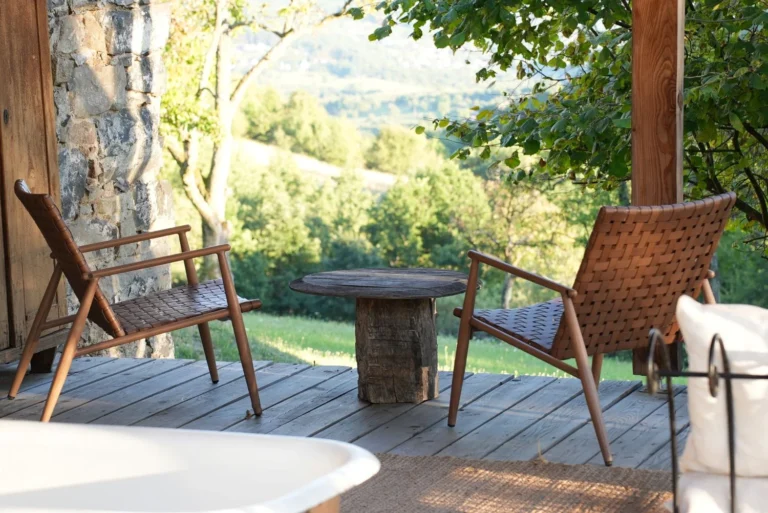
Our retreat is one of those homesteads. The hay barn that now houses the sauna and a lounge with a view is more than a hundred years old, and we kept its original timber frame. When you sit up in the loft looking down the valley, you are sitting in a piece of Nová Baňa’s history.
What history you can still see today
- The town square and town hall – the historic centre with burghers’ houses, perfect for a stroll and a coffee.
- Pohronské Museum – exhibitions on mining, crafts and life in the region.
- Calvary – a Way of the Cross above the town with a lovely view of the Hron valley.
- Tajch – a lake less than 3 km from us. The word tajch comes from the miners’ German and means an artificial reservoir.
Nová Baňa is best discovered slowly, the way things are done here. A morning walk through town, an afternoon trip into the surroundings and back to Na Samote in the evening, to the fire and a sky full of stars without light pollution.
Want to experience it too?
Choose your cabin and check the available dates.
More articles
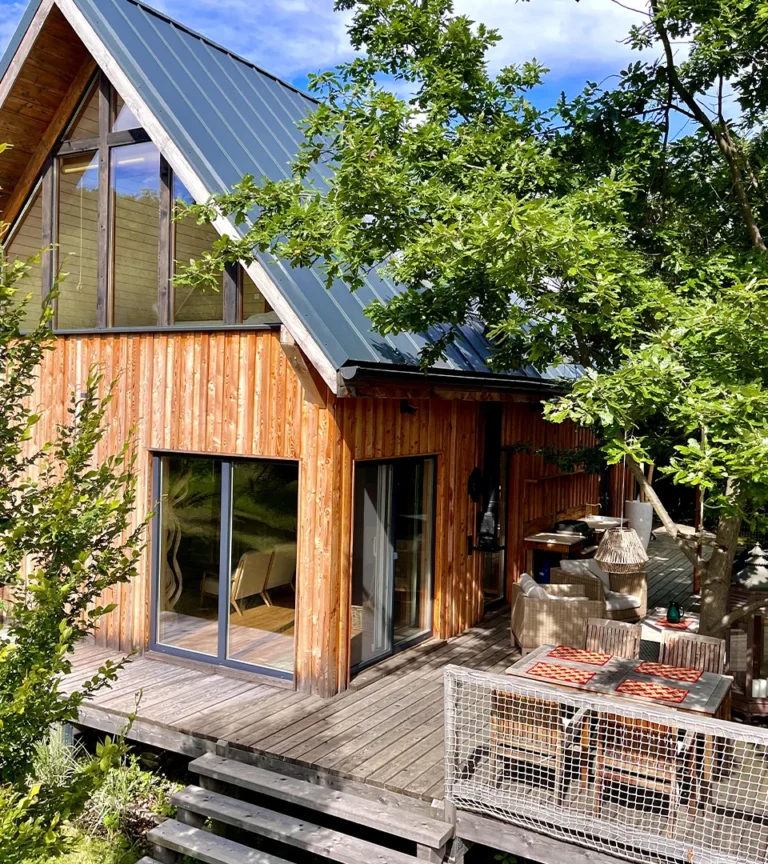
Na Samote on the TV JOJ show Na chalupe
A TV crew from the show Na chalupe came to visit Na Samote. Take a look inside the Forest House, the Spirit House and… Read more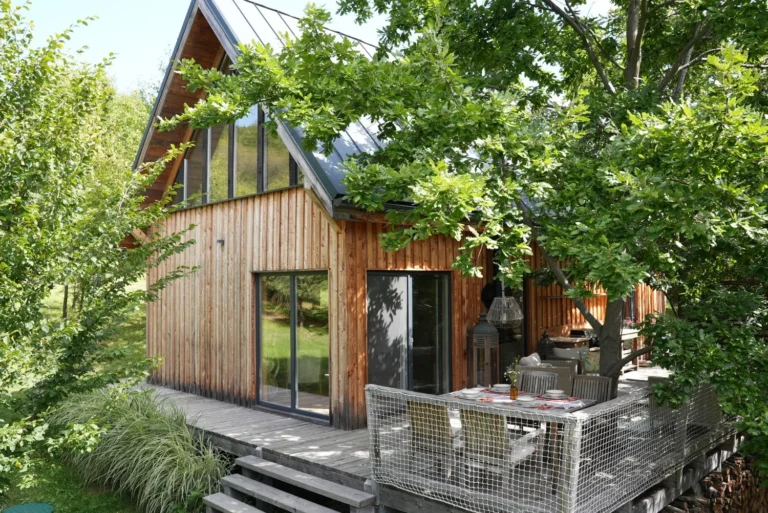
Our third feature in Pekné bývanie magazine
Pekné bývanie magazine wrote about our Forest House: how Martin built the timber house with his own hands and why the terrace wraps around… Read more